
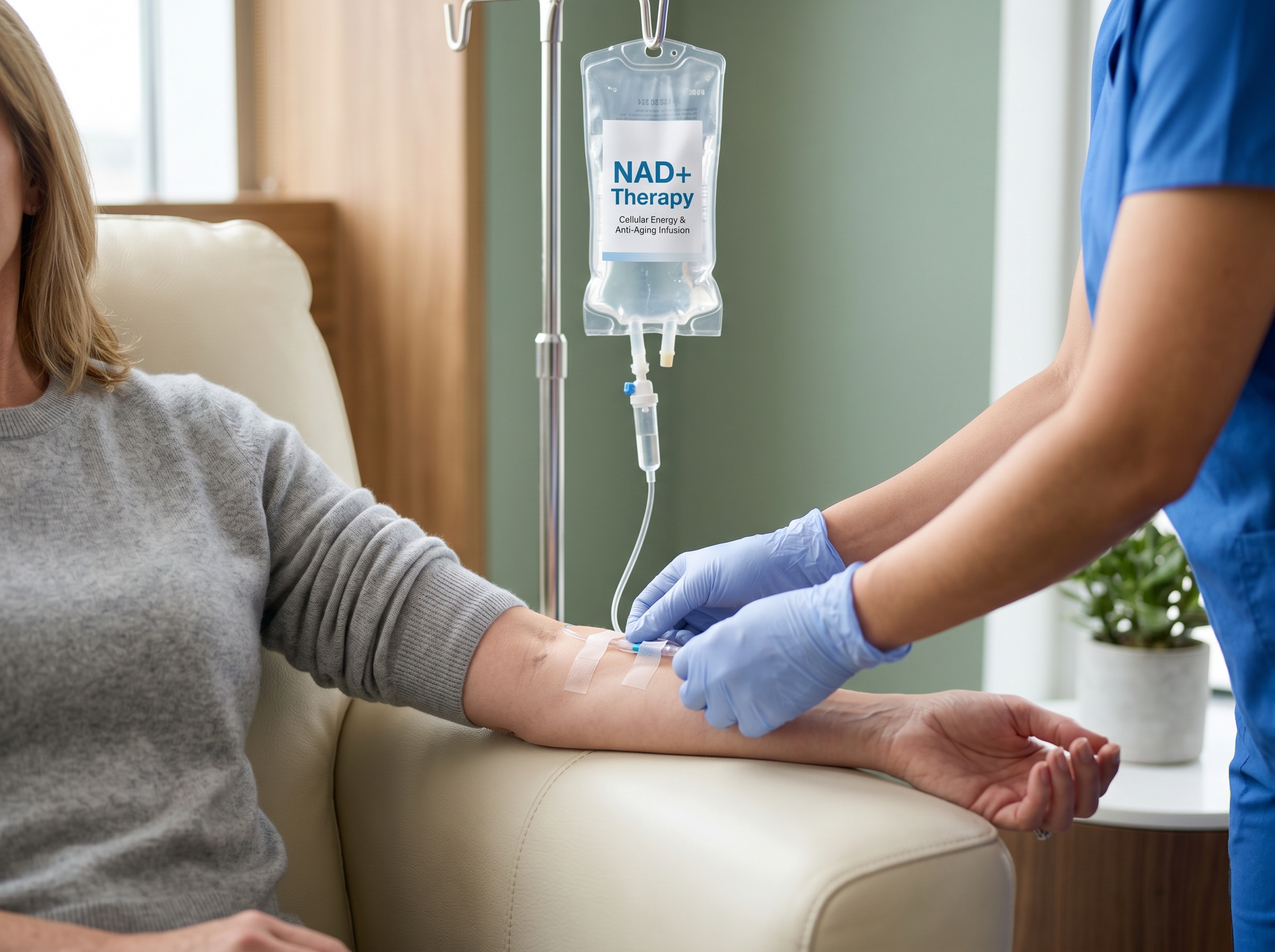
If you feel like you're running on low battery no matter how much you sleep, you're not alone — and that's exactly why NAD+ therapy is getting so much attention. It aims to "reset" your cellular energy system from the inside out, instead of just masking fatigue with caffeine or stimulants.
The Short Version
- NAD+ is a coenzyme in every cell that helps convert food into usable energy (ATP).
- Levels naturally decline with age, stress, poor sleep, and illness.
- Therapy usually means IV infusion or injectable/oral precursors like NMN and NR.
- Commonly sought for energy, focus, metabolic support, and healthy aging.
What Is NAD+ and Why It Matters
NAD+ (nicotinamide adenine dinucleotide) is a coenzyme found in every single cell in your body. Its core job is to help convert the food you eat into ATP, the actual energy currency your cells use to function.
Beyond energy production, NAD+ also activates important proteins like sirtuins and PARPs that are involved in DNA repair, cellular defense, and slowing aspects of the aging process. As we age — and as stress, poor sleep, toxins, and illness pile up — our natural NAD+ levels decline, which is linked with fatigue, brain fog, slower metabolism, and weaker cellular repair.
How NAD+ Therapy Works (The "Reset" Idea)
NAD+ therapy usually refers to delivering NAD+ directly into your bloodstream through an IV infusion, or supporting NAD+ levels with injectable or oral precursors like NMN and NR. IV delivery bypasses the gut and provides near-100% bioavailability, meaning your cells can use it immediately.
Think of it as refilling a drained battery pack — rapidly replenishing NAD+ stores so cells can revive energy production and repair damaged DNA more efficiently.
Many clinics structure therapy with an initial "loading phase" of several infusions over 1–2 weeks, followed by monthly or seasonal maintenance sessions to keep levels up.
What NAD+ Does Inside Your Cells
Here's what that "cellular reset" looks like under the hood:
Energy production
NAD+ is central to glycolysis, the TCA cycle, and oxidative phosphorylation — three major steps your cells use to turn nutrients into ATP. When NAD+ is low, these pathways slow down, leading to fatigue and sluggish performance.
DNA repair and longevity
NAD+ fuels enzymes like PARPs that repair DNA damage and sirtuins that help regulate gene expression, inflammation, and stress resistance. Supporting these systems is one reason NAD+ is so heavily studied in the context of healthy aging and longevity medicine.
Mitochondrial health
Mitochondria are your cells' power plants, and they rely on NAD+ to run efficiently. Restoring NAD+ can improve mitochondrial function, which often translates into better stamina, recovery, and resilience at the whole-body level.
Benefits People Seek
While individual experiences vary and research is still evolving, several potential benefits are commonly reported and discussed:
- Increased physical energy. Many clients describe more consistent, all-day energy rather than quick spikes and crashes — easier workouts, less afternoon slump, better ability to handle busy days.
- Sharper focus and mental clarity. Because NAD+ supports mitochondrial function and neurotransmitter balance in the brain, it's often used to help with brain fog, concentration, and memory.
- Metabolic support. By helping regulate key metabolic pathways, NAD+ can support more efficient energy use and may help with weight management when paired with healthy habits.
- Cellular repair and healthy aging. Popular in longevity and regenerative medicine for promoting DNA repair and cellular regeneration, with clients often noticing better recovery, improved skin quality, and more restorative sleep.
What a Typical Treatment Plan Looks Like
A session usually involves relaxing in a chair while an NAD+ solution is slowly infused through an IV over several hours. Infusions are commonly started at lower doses to test tolerance, then gradually increased as guided by a medical provider.
Many clinics use a front-loaded approach — such as five infusions over about 10 days, or multiple sessions over the first few months — to quickly rebuild NAD+ levels, followed by less frequent maintenance drips. Some providers also add weekly NAD+ injections or oral precursors between infusions to keep levels stable.
Safety, Side Effects, and What We Still Don't Know
Current evidence suggests NAD+ therapy is generally well-tolerated when supervised by a qualified clinician. Some people experience temporary flushing, lightheadedness, chest tightness, or fatigue during infusions, which usually improves if the drip is slowed.
Early human studies and real-world use show promising effects on energy, metabolism, and overall wellbeing — but large, long-term human trials are still in progress. That means NAD+ therapy is best seen as a cutting-edge wellness tool, not a magic cure or replacement for foundational habits like sleep, nutrition, movement, and stress management.
Is NAD+ Therapy Right for You?
NAD+ therapy may be worth exploring if you are struggling with persistent fatigue, brain fog, slow recovery, or if you are proactively focused on longevity and cellular health. The most important step is to work with a medically supervised clinic that can review your health history, medications, and goals, and then tailor a protocol to you.